
Choosing a dual dash cam involves balancing video resolution, low-light performance, and ease of use. While all these models record the front and rear, they differ mainly in sensor technology, connectivity speed, and extra features like cabin cameras or voice control. Your choice depends on whether you prioritize raw detail or night-time reliability.
Best overall: VIOFO A229 Plus, which uses dual STARVIS 2 sensors to provide consistent image quality and high dynamic range, making it a dependable choice for capturing license plates in varying light.
Best for first-time buyers: ROVE R2-4K Dual, as it arrives with a generous accessory bundle including a memory card, simplifying the setup process for those who want an out-of-the-box solution.
Best for heavy-duty use: REDTIGER F7NP, which features a supercapacitor for better heat resistance and longevity, standing up well to long hours on the road or parking monitoring.
This guide is for drivers looking for reliable, high-definition evidence for insurance or safety purposes.
How We Picked
We compared sixteen different dash cam listings to identify those that provide clear specifications and meaningful features for the average driver. To earn a place in this article, a product had to explicitly detail its image sensor type, resolution capabilities, and connectivity options like Wi-Fi speed.
All 10 products side by side — scroll sideways to see every column.
| Top Pick | Runner-Up | Best for Hot Climates | Best for Rideshare | Best for Fast Transfers | Best for WiFi 6 | Best for Parking | Best for Families | Best for Evidence | Best for Live Views | |
| Preview |  |  | 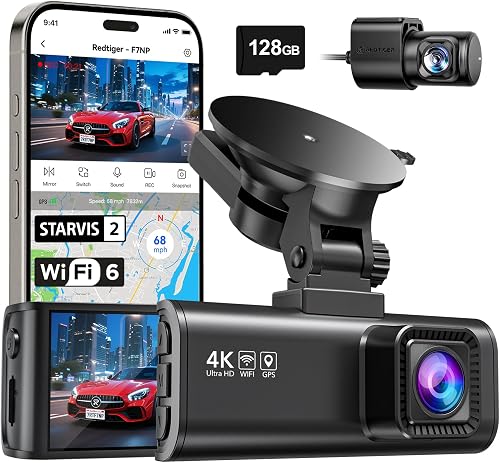 |  |  |  |  | 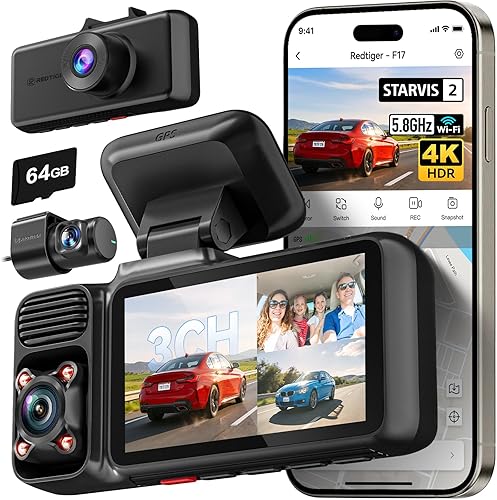 |  |  |
|---|---|---|---|---|---|---|---|---|---|---|
| Product | VIOFO A229 Plus | ROVE R2-4K Dual | REDTIGER F7NP | 360 View 4 Channel | BOTSLAB G300H Plus | 4K+4K WiFi6 Dash Cam | 4K+2K Starvis 2 | REDTIGER F17 3CH | ROVE R2-4K Pro | 4K+2K IPS Dash Cam |
| Brand | VIOFO | ROVE | REDTIGER | ZMOPO | BOTSLAB | TERUNSOUl | COXPAL | REDTIGER | ROVE | Driveye |
| Best for | Best Overall | Runner-Up | Best for Hot Climates | Best for Rideshare | Best for Fast Transfers | Best for WiFi 6 | Best for Parking | Best for Families | Best for Evidence | Best for Live Views |
| The listing says | Dual Sony STARVIS 2 IMX675 sensors Dual-channel HDR 2K front and rear | Upscaled 4K front and 1080P rear Sony STARVIS 2 IMX675 sensor | 4K front and 1080P rear recording STARVIS 2 sensor with WDR | Four 1080P cameras for full coverage Time-lapse recording and parking mode | 18-month product coverage STARVIS 2 sensor with HDR | True 4K front and rear recording AProX HD night vision with F1.5 aperture | 4K front and 2K rear recording 8-MP Starvis 2 IMX678 sensor | 4K front, 1080P inside and rear STARVIS 2 IMX675 sensor with HDR | 4K front and 2K rear recording Dual Sony STARVIS 2 sensors | 4K front and 2K rear recording STARVIS 2 sensor with HDR |
| More information | Check Latest Price on Amazon | Check Latest Price on Amazon | Check Latest Price on Amazon | Check Latest Price on Amazon | Check Latest Price on Amazon | Check Latest Price on Amazon | Check Latest Price on Amazon | Check Latest Price on Amazon | Check Latest Price on Amazon | Check Latest Price on Amazon |
1. VIOFO A229 Plus Dash Cam Front and Rear
Best for: Drivers needing reliable night-time license plate capture.
The VIOFO A229 Plus stands out by utilizing dual Sony STARVIS 2 sensors, which help reduce noise and motion blur when you’re driving in low light. This system allows for 2K resolution on both the front and rear, ensuring that your footage remains detailed. The inclusion of voice control makes it safer to lock clips or take photos without needing to reach for the camera.
The 5GHz Wi-Fi module is a major benefit for those who frequently download footage to their phones, as it significantly reduces wait times. However, if you plan to use the 24-hour parking mode, keep in mind that the necessary hardwire kit isn’t included and must be purchased separately. This camera isn’t for those who want a screen-less, hidden design, as it maintains a standard interface.
- Pros:
- Advanced dual STARVIS 2 sensors.
- Fast 5GHz Wi-Fi connectivity.
- Responsive voice control functionality.
- Cons:
- Hardwire kit sold separately.
- No HDR at 60fps.
2. ROVE R2-4K Dual Dash Cam Front and Rear
Best for: Users who want everything included in the box.
The ROVE R2-4K Dual is designed for convenience, shipping with a 128GB memory card so you can start recording immediately. It uses an upscaled 4K front resolution and 1080P rear recording, providing a good balance of detail for everyday driving.
The app allows for quick firmware updates and video downloads, which is helpful if you need to share evidence quickly. Note that while it offers a 24-hour parking mode, you’ll need to buy a separate hardwire kit to activate it. This model might not be for users who require native 4K resolution, as the front footage is upscaled from 2.5K.
- Pros:
- Includes 128GB memory card.
- Built-in thermal protection.
- Easy smartphone app integration.
- Cons:
- Upscaled 4K resolution.
- Hardwire kit required separately.
3. REDTIGER F7NP 4K Dash Cam Front Rear
Best for: Drivers in hot climates needing heat resistance.
The REDTIGER F7NP focuses on reliability by using a supercapacitor instead of a traditional lithium battery. This makes the unit more resistant to high temperatures, which is a significant advantage if you park your car in direct sunlight. The 4K front and 1080P rear resolution ensure that the primary view of the road is sharp and clear.
The wide 170-degree viewing angle on the front camera helps cover more of the road, reducing blind spots. While it supports parking mode, you must remember that this feature requires a separate hardwire kit, which is a common trade-off in this category. It isn’t the best choice for users who want to monitor the interior cabin, as this model focuses strictly on the front and rear.
- Pros:
- Supercapacitor for better heat resistance.
- Wide 170-degree front lens.
- Includes free memory card.
- Cons:
- Hardwire kit sold separately.
- Rear camera resolution is 1080P.
4. 360 View 4 Channel
Best for: Rideshare or commercial drivers needing full coverage.
The 360 View 4 Channel is unique because it provides four cameras to monitor the front, rear, and both sides of your vehicle. This is an excellent choice for drivers who want to ensure they have evidence for side-impact accidents or interior incidents.
While this system offers unparalleled coverage, the setup is more complex than a standard multi-lens system because of the extra wiring involved. If you want GPS data, you’ll need to purchase the logger separately, which is an extra step compared to models with built-in GPS. It isn’t for users seeking a simple, minimalist installation.
To maximize the 128GB card, use the time-lapse mode. This compresses 60 minutes of footage into just one minute of video. If you need 24-hour security, you must purchase the optional ACC hardwire kit separately. Without this kit, the camera won’t record while the vehicle is parked.
- Pros:
- Comprehensive four-way vehicle coverage.
- Infrared lights for interior visibility.
- Includes 128GB memory card.
- Cons:
- GPS logger sold separately.
- More complex installation process.
5. BOTSLAB G300H Plus 4K Dual Dash Cam Front and Rear
Best for: Drivers who value fast data transfer.
The BOTSLAB G300H Plus features 5.8GHz Wi-Fi, allowing you to move 4K files to your phone significantly faster than standard 2.4GHz models. The STARVIS 2 sensor provides clear low-light performance, which is essential for capturing details during dusk or night-time commutes. Its sleek design fits discreetly behind the mirror, keeping your view of the road clear.
The voice control system is quite responsive, letting you take photos or start video recordings without taking your eyes off the road. However, be aware that the camera’s Wi-Fi connection can’t be active at the same time as Apple CarPlay. Because iPhones only support one active Wi-Fi connection, you must choose between the dash cam app and your wireless car interface. If you need to download footage while driving, you’ll have to disconnect from CarPlay first.
For around-the-clock parking surveillance, you must purchase a separate hardware kit to enable continuous recording. The unit includes a 64GB card, though it supports up to 256GB. With its supercapacitor, the device operates reliably in temperatures ranging from -20℃ to 70℃.
- Pros:
- Fast 5.8GHz Wi-Fi data transfer.
- Compact, sleek design.
- Intuitive voice control.
- Cons:
- Wi-Fi conflicts with CarPlay.
- Hardwire kit sold separately.
6. 4K+4K WiFi6 Dash Cam
Best for: Tech-focused users wanting the latest connectivity.
The 4K+4K WiFi6 Dash Cam is one of the few models to offer Wi-Fi 6, providing a very stable and fast connection to your smartphone. With true 4K resolution on both the front and rear cameras, you get high-quality evidence from both ends of your vehicle. It’s built to withstand extreme temperatures, making it a robust option for various weather conditions.
The inclusion of a 128GB card is a great bonus, allowing for plenty of storage right out of the box. While the hardwire kit is sold separately, the parking mode features are well-integrated for those who choose to install it. It may be overkill for a driver who only needs basic coverage and prefers a simpler, less tech-heavy device.
- Pros:
- True 4K resolution on both cameras.
- Latest Wi-Fi 6 connectivity.
- Includes 128GB memory card.
- Cons:
- Hardwire kit sold separately.
- High-end features may be unnecessary for some.
7. 4K+2K Dual Dash Cam Front and Rear
Best for: Drivers who prefer a hidden, screen-less design.
The 4K+2K Starvis 2 is perfect for those who don’t want a distracting screen on their windshield. By removing the display, the camera runs cooler and lasts longer, which is a practical benefit for long-term ownership. It uses the high-end IMX678 sensor, which is excellent for reading road signs and license plates in difficult lighting.
The installation uses a 3M adhesive mount that keeps the camera firmly in place without the risk of falling off. If you live in an area with extreme temperatures, the screen-less build provides necessary durability for daily use. Because there’s no screen, you must use the 5GHz WiFi app to change settings or preview your footage.
This model isn’t for anyone who prefers to check their recording status directly on the device. To ensure you don’t lose critical evidence, you must use a high-speed UHS-1 U3 microSD card. Using a slower card will cause recording failures during high-bitrate 4K capture.
- Pros:
- Discreet, screen-less design.
- High-end IMX678 sensor.
- Supports up to 512GB cards.
- Cons:
- Requires app for all adjustments.
- Memory card not included.
8. REDTIGER F17 4K 3CH Dash Cam
Best for: Families needing interior and exterior monitoring.
The REDTIGER F17 3CH provides a 360-degree view by including front, cabin, and rear cameras. This is ideal for parents who want to keep an eye on passengers or rideshare drivers who need to document the interior of their vehicle. The STARVIS 2 IMX675 sensor on the front camera ensures that critical footage remains sharp even on dim streets.
The app allows for simultaneous replay of all three channels, which makes reviewing an incident straightforward. If you need maximum resolution, turn off the cabin camera to enable 4K front and 1080P rear recording. This shift prioritizes detail retention over total cabin coverage.
Keep in mind that the cabin camera will occupy significant storage space, so verify your card capacity before starting long trips. This system isn’t for someone who only wants to monitor the road ahead and behind. If you prioritize parking security, you must purchase the extra hardwire kit to enable time-lapse and collision detection modes. Without this kit, you lose the G-sensor protection while the vehicle is parked.
- Pros:
- Triple-camera coverage.
- Simultaneous three-channel video replay.
- Reliable supercapacitor power.
- Cons:
- Requires larger storage for 3 channels.
- Hardwire kit sold separately.
9. ROVE R2-4K Dual PRO Dash Cam Front and Rear
Best for: Professional drivers requiring high-end evidence.
The ROVE R2-4K Pro features Sony STARVIS 2 sensors on both cameras, ensuring clarity in all conditions. The 8MP front and 5MP rear sensors capture fine details like license plates and road signs. Use the included CPL filter to cut windshield glare; failing to install this accessory often results in washed-out footage during bright, sunny days.
The quad-mode GPS tracks your precise route and speed using four satellite systems. If you need to validate an insurance claim, use the free ROVE GPS Player to export your trip with a full data overlay.
For continuous protection, the camera offers three parking modes: time-lapse, motion detection, and collision detection. If you choose motion detection, ensure your vehicle is parked in a low-traffic area to avoid filling your storage with irrelevant clips. Note that the hardwire kit is sold separately; without it, you can’t access these intelligent parking features. This system supports up to 1TB microSD cards, making it ideal for those who need long, uninterrupted recording cycles.
- Pros:
- Dual STARVIS 2 sensors.
- Includes CPL filter.
- Highly accurate quad-mode GPS.
- Cons:
- Hardwire kit sold separately.
10. 4K+2K IPS Dash Cam
Best for: Users who want a clear live view.
The 4K+2K IPS Dash Cam features a 3-inch IPS screen that remains visible even in direct sunlight, making it easy to confirm your camera is recording. The simple plug-and-play setup is great for those who aren’t tech-savvy and just want a reliable device. It includes a 64GB card, so you have enough space to start recording immediately.
The voice control is a nice feature for hands-free operation, helping you stay focused on the road. While it does support continuous parking monitoring, you’ll need to buy a hardwire kit separately to use it. If you need to capture hit-and-runs while away from your vehicle, ensure you purchase this kit, as the camera relies on it to auto-detect collisions and vibrations while parked.
This model isn’t for someone who prefers a hidden camera, as the screen size makes it more visible on the windshield. If you prioritize discreet placement over a live display, look for a model without an integrated screen. However, if you need to preview, download, or share footage quickly, the dual-band WiFi allows for a fast, stable connection to your phone.
- Pros:
- Clear 3-inch IPS screen.
- Includes 64GB memory card.
- Easy voice control commands.
- Cons:
- Larger size is more visible.
- Hardwire kit sold separately.
How to Choose in Sixty Seconds
Which sensor technology actually matters for night recording?
Look for cameras that specifically list Sony STARVIS 2 sensors. This technology significantly improves light sensitivity and dynamic range compared to older sensors, which is the most important factor for capturing license plates at night or in tunnels. Many manufacturers use WDR or HDR, but these are software enhancements that work best when paired with a high-quality physical sensor. If you drive frequently in low-light conditions, prioritizing a model with the STARVIS 2 sensor will provide the clearest, most reliable evidence. You can verify the technical standards for these components through the Sony Semiconductor Solutions official technical documentation. Always check the sensor model number if provided, as newer versions perform better than legacy ones.
What should I skip if I want a simple setup?
Skip multi-channel systems or cameras that require complex hardwiring if you’re looking for a simple, plug-and-play experience. Models like the VIOFO A229 Plus or the ROVE R2-4K Dual are easier to install because they focus on front-and-rear coverage and use standard power cables. Avoid systems with cabin cameras or four-way coverage unless you specifically need to document the interior of your vehicle, as these add significant time to the installation process. Stick to a basic front-and-rear kit to minimize cable management and potential setup errors. Most dash cams can be powered via a standard 12V port, which is the fastest way to get started without involving your vehicle’s fuse box.
What must I confirm before ordering?
Always confirm the memory card compatibility, as 4K recording generates large file sizes that require high-speed, high-endurance cards to avoid frame drops or corruption. Check if the product listing includes a card, and if not, ensure you purchase one that meets the camera’s specific speed class requirements, usually UHS-1 U3 or higher. Additionally, check the camera’s temperature rating, especially if you live in an area with extreme summer heat or winter cold. If you intend to use the parking mode, assume you’ll need to purchase a hardwire kit separately unless the listing explicitly states it’s in the box. Confirming these small details prevents the frustration of having a new camera that can’t record or save footage reliably.
Frequently Asked Questions
What does the dash cam need to function properly?
A dash cam requires a stable power source and a high-endurance microSD card to function reliably. Most cameras connect to your vehicle’s 12V port, though parking modes require a hardwire kit connected to the fuse box. Use only high-endurance cards to prevent recording errors.
What does owning a dash cam ask of the buyer?
You should format your memory card through the camera’s menu every few months to ensure your evidence remains safe and accessible. Regular formatting prevents file system errors that cause recording failures. Note that some cameras may require a specific card speed class to function correctly.
What usually goes wrong first with these devices?
Most dash cam issues stem from memory card failure or inconsistent power delivery. Using a high-endurance card and the manufacturer’s original power cable typically resolves these recording problems. Ensure your card meets the camera’s specific speed requirements to avoid data corruption.
Is the simplest dash cam on the list enough?
A simple dash cam is sufficient for capturing reliable evidence of front and rear incidents. Models with a quality sensor, such as a STARVIS unit, provide clear footage for daily commutes. You do not need advanced features like voice control to document an accident effectively.
Closing
The VIOFO A229 Plus remains a top recommendation for its balanced performance and dual STARVIS 2 sensors, making it a reliable choice for most drivers. If you prefer a comprehensive package that includes a 128GB memory card and CPL filter, the ROVE R2-4K Dual PRO is a strong alternative. For those who prioritize heat resistance in hot climates, choose a model built with a supercapacitor, such as the REDTIGER F7NP.
Regardless of your choice, verify that your memory card is high-endurance and rated for 4K recording to avoid frame drops. If you plan to use 24/7 parking mode, remember that you must purchase a hardwire kit separately, as these are rarely included in the box.
Once your camera arrives, test the app connectivity immediately. If you have an iPhone, note that you can’t use CarPlay and the dash cam’s Wi-Fi simultaneously, as both require an active connection. Finally, adjust your recording settings to match your local driving needs for the best results.
