
An external sensor tpms for car tires helps you monitor pressure based on your driving habits and vehicle type. While these systems provide real-time data to prevent tire issues, they differ in how they display information and handle power. Some prioritize smartphone integration, while others focus on dedicated, solar-powered screens for long-haul stability.
Best overall: Wireless Universal TPMS, as it provides a reliable, full-color display and a clear 18-month warranty that ensures long-term protection for the average daily driver. Best for smartphone users: Bluetooth Car TPMS, because it integrates directly with Apple CarPlay, allowing you to see your tire data on your existing dashboard screen without extra clutter. Best for heavy-duty use: Tymate TM7 RV TPMS, which stands out for its high pressure range and dual USB charging, making it a robust choice for larger vehicles and trailers.
This guide is for anyone looking to add a safety layer to their vehicle, whether it lacks a factory system or you simply want more control.
How We Picked
We compared 32 different Amazon listings to find systems that offer the most reliable data and ease of use. To earn a spot here, each product had to clearly state its pressure monitoring range, its alarm modes, and its power source. We prioritized systems that included all necessary hardware for installation and offered clear, actionable information about battery life and sensor compatibility. Products were excluded if they lacked essential safety alerts or failed to provide clear instructions for their specific sensor types.
All 10 products side by side — scroll sideways to see every column.
| Top Pick | Runner-Up | Best for Dual Charging | Best for RV Trailers | Best for Self-Calibration | Best for Custom Alerts | Best for Quick Setup | Best for Fast Refresh | |||
| Preview |  | 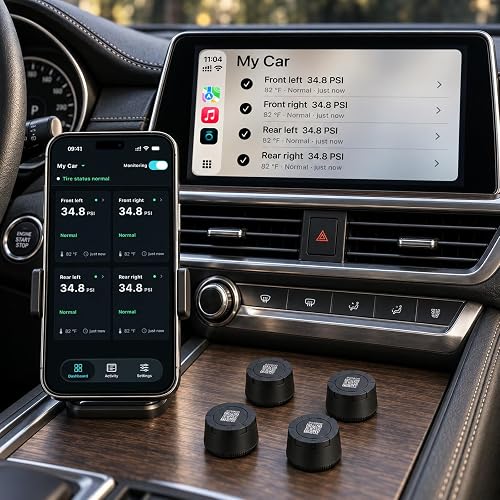 | 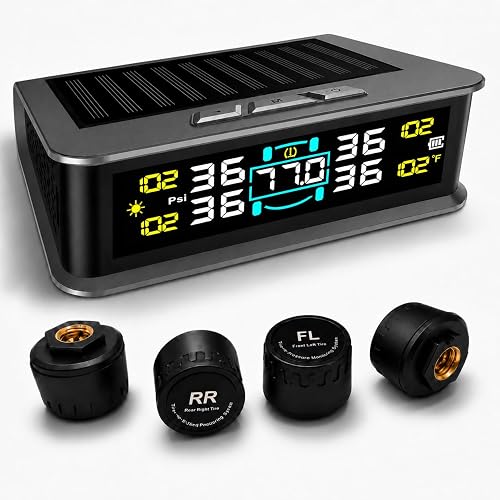 |  |  |  |  |  |  |  |
|---|---|---|---|---|---|---|---|---|---|---|
| Product | Wireless Universal TPMS | Bluetooth Car TPMS | Solar USB-C TPMS | Tymate TM7 RV TPMS | M13 Trailer TPMS | Adjustable PSI TPMS | Bluetooth External TPMS | Solar Charging TPMS | 2026 RV TPMS | Tymate TM12 TPMS |
| Brand | VESAFE | Hyphoon | Flydew | Tymate | Masoll | Flydew | B-Qtech | Avutrel | XBNVGP | Tymate |
| Best for | Best Overall | Runner-Up | Best for Dual Charging | Best for RV Trailers | Best for Self-Calibration | Best for Custom Alerts | — | Best for Quick Setup | Best for Fast Refresh | — |
| The listing says | Color LCD shows 4-tire pressure and temperature Adjustable pressure and temperature alerts | Receive alerts via Apple CarPlay Real-time monitoring in Hyphoon iPhone app | Adjustable 0-99 PSI monitoring range Real-time 4-tire pressure and temperature data | Accuracy of ±1.5 PSI or ±3°F Powered via cigarette lighter socket | Fits vehicles with 4 tires up to 38ft Auto-calibrates based on reference pressure | Adjustable 0–99 PSI pressure alerts Real-time monitoring for 4 tires | Bluetooth app monitoring for Android and iOS 6 alarm modes for leaks and pressure | 5 real-time security alarm modes Real-time pressure and temperature display | 2 PSI and 3°F precision with 0.3s refresh 6 alarm modes with 0-88PSI threshold range | Supports up to 12 tires 6 alarm modes with IP67 waterproof sensors |
| More information | Buy on Amazon | Buy on Amazon | Buy on Amazon | Buy on Amazon | Buy on Amazon | Buy on Amazon | Buy on Amazon | Buy on Amazon | Buy on Amazon | Buy on Amazon |
1. Wireless Universal TPMS
Best for: Daily commuters wanting a simple, all-in-one safety upgrade.
The Wireless Universal TPMS features a full-color LCD screen that updates every five minutes to keep you informed of pressure and temperature changes. The sensors are designed to stop transmitting 15 minutes after you stop driving, which helps preserve the battery life of the CR1632 cells. This system is a solid choice for those who want a dedicated display that doesn’t rely on a smartphone connection.
The monitor includes a USB port to charge your other mobile devices, and the unit itself can act as an escape hammer in an emergency. However, this system is explicitly not suitable for motorhomes, campers, or trailers, so it isn’t for those with larger towing setups.
Pros
- Full-color real-time LCD screen
- Includes integrated escape hammer
- Adjustable alert threshold values
Cons
- Not for RVs or trailers
- Requires manual monitor placement
2. Bluetooth Car TPMS
Best for: Drivers who prefer using their existing infotainment display.
The Bluetooth Car TPMS sends data directly to an iPhone app, and it’s compatible with Apple CarPlay for alerts while you’re on the road. This setup allows you to view individual tire status and historical data without needing an extra screen on your dashboard. It’s a modern approach for those who already use CarPlay for navigation and music.
The app provides 14 days of history and trend analysis, which helps you catch slow leaks before they become major problems. It supports multiple vehicle profiles, making it easy to swap between different cars. Because this relies heavily on your phone and the app, it may not be for drivers who prefer a completely standalone, “set-it-and-forget-it” hardware experience.
Pros
- Integrates with Apple CarPlay
- Detailed 14-day history analysis
- Supports multiple vehicle profiles
Cons
- Relies on smartphone app
- No dedicated hardware screen
3. Solar USB-C TPMS
Best for: Drivers who want flexible power options for their display.
The Solar USB-C TPMS uses a built-in solar panel to keep the monitor charged during the day, with a USB-C port available for backup power. This dual-charging setup is ideal for people who drive in varying light conditions or keep their car parked for long periods. The screen shows all four tire positions clearly, making it easy to spot an issue at a glance.
The sensors arrive pre-paired, which simplifies the initial installation significantly. You can customize the high- and low-pressure alarm values to match your specific vehicle’s needs. If you drive a pickup or a small trailer, set these thresholds based on your current load conditions to avoid false alerts. The system supports a range of 0-99 PSI, covering most standard passenger and light-duty vehicles.
Since it relies on external sensors, it isn’t for those who are worried about the aesthetics of sensors mounted on their valve stems. If you notice a low sensor battery alert, check the CR1632 batteries.
Pros
- Dual solar and USB-C charging
- Pre-paired sensors for setup
- Adjustable pressure alarm ranges
Cons
- Requires valve stem sensors
- Solar charging depends on light
4. Tymate TM7 RV Tire Pressure Monitoring System
Best for: RV and trailer owners needing high-pressure monitoring.
The Tymate TM7 RV TPMS is built for a wide range of vehicles, supporting pressures up to 144 PSI. It plugs directly into your cigarette lighter, which is a convenient way to power the unit without needing to worry about batteries for the main display. The vibrant color LCD screen features an adjustable backlight, ensuring you can read your data clearly whether it’s day or night.
The system also provides two extra USB outlets on the power plug, which is helpful for keeping your phone or tablet charged during long trips. It’s a highly capable tool for commercial drivers or those who tow trailers. However, if your trailer is longer than 36 feet, the listing recommends adding a repeater, which is an extra purchase.
Pros
- Handles up to 144 PSI
- Includes dual USB charging ports
- Clear color LCD backlight
Cons
- Repeater needed for long trailers
- Requires cigarette lighter socket
5. M13 Tire Pressure Monitoring System
Best for: Drivers who want an intelligent, self-calibrating system.
The M13 Trailer TPMS is designed to be highly automated, using an intelligent system that sets reference pressures based on your standard tire readings. It triggers alarms when pressure deviates by 25% above or 15% below your set point, removing the need for manual threshold setup. If you inflate or deflate your tires, the sensors automatically recalibrate to these new levels.
The monitor uses a high-efficiency solar panel and features an anti-reflective display that adjusts brightness automatically for day and night use. It works well for vehicles up to 38 feet in length. If your trailer exceeds 38 feet, you must install a Masoll signal booster to ensure a reliable connection.
The system provides precise detection ranging from 0 to 87 PSI with an accuracy of 1.5 PSI. If your tires require pressures exceeding 87 PSI, this unit won’t provide accurate readings. Always check your tire sidewall before installation to ensure your operating range falls within these limits.
Pros
- Automatic pressure calibration
- Anti-reflective solar-powered display
- Intelligent alarm threshold logic
Cons
- Booster needed for trailers over 38 feet
- Limited to 87 PSI maximum pressure
6. Adjustable PSI TPMS
Best for: Users who need specific, custom alarm settings.
The Adjustable PSI TPMS offers a wide 0–99 PSI monitoring range, making it a versatile tool for various vehicles, from cars to small trailers. Its six alarm modes cover everything from rapid leaks to high temperatures, and it identifies the specific tire that needs your attention.
Set your high- and low-pressure warning values based on your vehicle’s specific load and current driving conditions. For standard highway driving, use lower, tighter ranges to catch slow leaks early. Failing to calibrate these values to your specific tire specifications forces you to endure annoying false alarms or, worse, miss a genuine pressure drop.
The monitor supports both solar and USB-C charging, ensuring consistent operation regardless of the weather. The sensors are pre-paired and include anti-theft nuts to keep them secure. Use the USB-C port during nighttime driving or after long periods of storage to ensure the internal battery remains fully charged.
Pros
- Wide 0–99 PSI range
- Solar and USB-C power
- Pre-paired, secure sensors
Cons
- Performance tied to sunlight
- No advanced app features
7. Bluetooth External TPMS
Best for: Smartphone-savvy drivers with multiple types of vehicles.
The Bluetooth External TPMS allows you to monitor your tires through an app on your Android or iOS phone, eliminating the need for extra screens or cables. It supports 2, 3, or 4-wheel modes, making it flexible enough for a variety of setups beyond just standard cars. The app provides real-time data and customizable alert limits for different vehicle types.
If you’re monitoring a trailer or RV, use the custom threshold settings to avoid false alarms. You should set your PSI limits based on the specific load requirements of your vehicle rather than generic factory defaults. This ensures the 6-in-1 alarm system triggers only when a genuine risk like a leak or high-pressure spike occurs.
The sensors are rated IP67, meaning they’re built to handle both dust and water exposure, and they function in extreme temperatures from -40°F to 176°F. This is a robust solution for those who prefer keeping their dashboard clean. Since the interface is entirely through your phone, it isn’t for those who want a permanent, dedicated display that’s always on. Relying on a phone means you must ensure your device is mounted and visible during long drives to catch visual alerts.
Pros
- No extra display needed
- IP67 waterproof-rated sensors
- Supports multiple wheel configurations
Cons
- Phone must be active
- No dedicated hardware screen
8. Solar Charging TPMS
Best for: Drivers who want the easiest, fastest installation possible.
The Solar Charging TPMS is designed for quick setup, with a focus on simplicity that allows you to get up and running in about three minutes. The display automatically adjusts its brightness for clear visibility in both strong sunlight and at night. It provides real-time monitoring of both pressure and temperature to help keep your tires in safe condition.
If you drive in extreme weather, rely on the four external sensors. They’re built to withstand snow and water, ensuring they remain functional when conditions turn harsh. You should choose this model if you prefer a set-it-and-forget-it interface. If you require deep data logs or smartphone alerts, this unit will likely disappoint, as it focuses strictly on immediate, in-cab warnings.
The system is compatible with many vehicle types, including sedans, vans, and off-road vehicles. While it’s very easy to use, it lacks the advanced smartphone integration or history-tracking features found in more complex models. Use the USB charging port during long stretches of overcast weather to ensure the internal battery stays topped off, as solar panels alone may struggle during extended winter darkness.
Pros
- Very fast setup time
- Automatic brightness adjustment
- Durable, weather-resistant sensors
Cons
- Basic feature set
- No historical data analysis
9. 2026 RV TPMS
Best for: Drivers who need the fastest data refresh rates.
The 2026 RV TPMS stands out with a sensor refresh rate of every 0.3 seconds, which is three times faster than standard systems. This ensures you get instant alerts for leaks or overheating, a critical feature when towing heavy loads. It supports vehicles up to 50 feet, making it a powerful option for long-haul drivers.
The dual-charging design allows for solar or USB-C power, and the unit turns on and off automatically with your engine. Installation is tool-free and takes just two minutes. Always perform a soap water test after tightening the anti-vibration nuts; this confirms a leak-free seal and prevents air loss. If your tires are rated above 88 PSI, this system isn’t for you, as its thresholds are capped at 88 PSI or 6 BAR.
Because this is a high-performance unit, it may be overkill for a simple daily commuter car that rarely leaves the city. Use the customizable alert thresholds to match your specific load, whether you’re off-roading or highway towing.
Pros
- Very fast refresh rate
- Supports vehicles up to 50ft
- Tool-free, fast installation
Cons
- May be more than needed
- Performance-focused design
10. Tymate TM12 RV Tire Pressure Monitoring System
Best for: Large RVs and complex towing setups.
The Tymate TM12 TPMS is designed to support up to 12 tires, making it perfect for complex vehicles that have a front vehicle, spare, and trailer configuration. The screen displays data in four zones, allowing you to monitor multiple setups simultaneously. It’s an ideal choice for those who need to keep an eye on a large trailer or a motorhome with a tow vehicle.
The system uses a 433Hz receiver for a stable connection and includes a comprehensive suite of alarm modes to cover every possible tire condition. It’s a highly professional-grade tool for long-distance travelers. However, it’s a more complex system to set up than the basic models designed for standard passenger vehicles, so it isn’t for those who want a simple, single-car solution.
Pros
- Supports up to 12 tires
- Four-zone display system
- Very stable signal range
Cons
- More complex to configure
- Overkill for basic cars
How to Choose the Best External TPMS for Car Tires
Which display type is actually better for me?
The choice between a dedicated hardware screen and a smartphone app comes down to your dashboard habits. A dedicated screen, like those on the Wireless Universal TPMS, is always visible and doesn’t require you to open an app or have your phone mounted. This is safer for drivers who want to keep their eyes on the road. Conversely, app-based systems like the Bluetooth Car TPMS are better if you already use Apple CarPlay or Android Auto and want to keep your dashboard clean. Always check that your phone is compatible with the app provided by the manufacturer before you make your final choice.
Does the power source really matter?
Yes, power is often the point of failure for monitors with limited battery capacity. Solar-powered units, such as the Solar USB-C TPMS, are great for convenience, but they do need enough sunlight to stay charged. If you park in a garage or live in a cloudy area, you must ensure the unit also has a reliable USB backup. Systems that plug into a cigarette lighter socket, like the Tymate TM7 RV TPMS, are the most reliable because they draw constant power from the car. If you drive long distances, a plug-in system is usually more dependable than a solar-only one, which might lose charge during long, overcast trips.
What should I confirm before ordering?
You must verify the pressure range supported by the system. Not every TPMS is built for the high PSI found in heavy-duty RV tires, so check the manufacturer’s range against your tire’s maximum pressure. Additionally, verify if your vehicle’s valve stems are compatible with external sensors. Most manufacturers recommend using metal valve stems to support the weight of these sensors. Finally, check the total vehicle length if you’re towing; systems like the M13 Trailer TPMS may require a signal booster for trailers over 38 feet to prevent data loss.
Frequently Asked Questions
What does the system need to work properly?
Most external TPMS units require a clean, threaded valve stem for installation. You should use metal valve stems to support the sensor weight and prevent leaks at high speeds. Always set your tire pressure to the manufacturer’s recommended cold pressure before installing the sensors to ensure accurate calibration.
What usually goes wrong first with these systems?
Signal interference or range limitations are common in larger vehicles like RVs or trailers. If the monitor is too far from the sensors or obstructed by metal, the system may display a signal loss error. Always ensure the internal O-ring is clean and the sensor is tightened properly to prevent leaks.
Is the simplest system on the list enough for my needs?
Simple solar-charging TPMS systems are sufficient for most sedans and SUVs. These units monitor the same essential pressure and temperature data as complex models. You only need advanced systems if you require monitoring for trailers, high-pressure ranges above 87 PSI, or a larger number of wheels.
Closing
For most drivers, the Wireless Universal TPMS remains the most balanced choice due to its reliable, dedicated screen and clear alarm system. If you prefer to keep your dashboard free of extra devices, the Bluetooth Car TPMS offers a seamless way to integrate tire safety into your existing infotainment setup.
Regardless of the system you pick, ensure your tire valves are in good condition before installation to prevent leaks. Using a metal valve stem is recommended to ensure the stability and safety of the external sensors.
Proper maintenance of tire pressure is essential for vehicle safety. Take a moment to check your tire’s recommended PSI in your owner’s manual so you can set your new alarm thresholds correctly during your first drive. If you’re towing a trailer longer than 36 to 50 feet, consider adding a signal repeater to maintain a consistent connection between your sensors and the monitor. Always perform a soap water test after installation to confirm a leak-free seal on each valve stem.
